
The vaccine would not have production scalability issues unlike Covaxin, Bharat Biotech's COVID-19 virus vaccine.
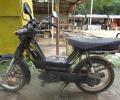
Kinetic Engineering (KEL), the makers of the iconic Luna two-wheelers in the seventies, will soon start producing components for an electric version of the moped. Pune-based Kinetic said in September that Luna would make a comeback in an electric avatar. The electric Luna, or E-Luna, will be launched by KEL's sister company Kinetic Green Energy and Power Solutions.

'If there are any symptoms/variants of concern, states can prepare accordingly.'
The pharmaceutical and the consumer durables sectors, which depend on China for imports, have not been impacted yet due to unrest in China with people protesting against lockdowns. But the lockdown could have an impact on the supply of components used in consumer durables if it continues for the next fortnight. In the pharmaceutical industry, Indian players import 66-70 per cent of their bulk drug requirements from China.

An immune-escape Covid-19 strain coupled with the natural spike in influenza and pneumonia cases during winters may lead to a rise in hospitalisation.

Codeine-based formulations are under the scanner for misuse as a narcotic product.
The Centre has asked traders and resellers of medical devices to register in an attempt to expand the ambit of regulating the medical devices industry in the country. The move can have far-reaching consequences for both consumers and traders alike as products like face masks or prophylactics - now sold through grocers and other channels - may face issues of availability. In a notification dated September 30, the union ministry of health and family welfare said anyone wanting to sell, stock, exhibit or offer for sale or distribute a medical device, including in-vitro diagnostic medical device, will need a certificate of registration.

'This year there is a sharp spike in fever cases, and it seems to be more than the pre-COVID-19 levels.'
The transition of Class A and Class B medical device makers to the licensing regime by October 1 seems to be an uphill task with several small and medium manufacturers saying they are still awaiting the audit from the government authorities. If the licenses don't come through, either due to lack of audits or MSME units not clearing the audits, then a few thousand small-scale medical device units will face the issue of business continuity in three weeks. Class A medical devices are those with low to moderate risk to the patient or user (surgical dressings for example), while Class B medical devices refer to devices with moderate risks that require special controls (catheters for example).

This would be India's largest crowd-funded programme to help patients with a particular disease.
As many as 34 new drugs were added to and 26 dropped from an updated list of essential medicines on Tuesday, with the government saying this will reduce "patients' out-of-pocket expenditure". The National List of Essential Medicines (NLEM 2022) has 384 drugs, up from 376 in 2015. "Drafting this list is a lengthy process, and around 350 experts from across India have held over 140 consultation meetings to draft the NLEM 2022," Union Health Minister Mansukh Mandaviya said.

'Just put a patch on your arm and the vaccine can be absorbed by the body.'
'Gift-giving' - from free dinners and drug samples to promotional merchandise - seems to be driving drugmakers' marketing - a marketing prescription deeply entrenched in the industry. This is a well-oiled racket that sees pharmaceutical (pharma) companies 'gifting' doctors to push their respective drugs under the guise of marketing. But is there a cure in sight to end this unhealthy alliance? The recent controversy following the income-tax raids on Bengaluru-based drugmaker Micro Labs, makers of popular paracetamol brand Dolo-650, has brought this to the fore, again.

'The tie-up with Serum Institute Life Sciences brings to the table their strengths in manufacturing and also their vaccine portfolio.'
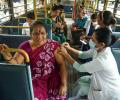
'We are trying to salvage 50-100 million doses of Covishield with the latest drive on booster doses.'
Bulk of the medicine sales in the $22-24 billion domestic pharma market happens through offline retail chemists. With the entry of online pharmacies, this space has started to witness a shake-up. Sample this: Dawaa Dost, a Rajasthan based digital health start-up, generates medicine orders from 'kirana' stores and women self-help groups (SHGs) that operate in villages, and then service these orders through its affiliated network of pharmacies. Biddano, another health-tech start-up, has a platform that acts as an aggregator for neighbourhood chemist shops.
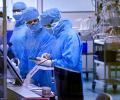
India's medical devices imports surged 41 per cent to touch Rs 63,200 crore in 2021-22, led by a 48 per cent year-on-year (YoY) jump in imports from China to Rs 13,538 crore, the commerce ministry data analysed by the Association of Indian Medical Device Industry (AiMeD) has showed. Local industry players say this has led to several small and medium units to shut shop. Rakesh Vaid of Usha Fabs, a garments exporter, had started making N95 masks in his Gurgaon factory during the peak of the Covid-19 pandemic.

The central government has for the first time allowed a private company, Bajaj Healthcare, to process opium to extract alkaloids used to make pain-killers, cough syrups, and even cancer drugs. Two government factories in Ghazipur, Uttar Pradesh, and Neemuch, Madhya Pradesh, do the work yet, processing some 800 tonnes of opium gum annually to extract alkaloids. The government on Tuesday gave Thane-based Bajaj Healthcare an initial contract to process 500 tonnes of opium gum annually and wants production to be at 800 tonnes per annum (tpa) in the next five years, indicating the state's exit from the highly-regulated sector.
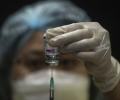
Pune-based Serum Institute of India (SII) is sitting on 200 million doses of Covishield that were manufactured in December and are set to expire in September. The company is likely to destroy these vaccines if nothing works out, Sohini Das reports.

'There will be ups and downs, and we have to plan how we live with it now.'
 © 2026 Rediff.com - Advertise with us - Disclaimer - Privacy Policy - Sitemap - Feedback - About us - Terms of use - Grievances